By
Knowledge Coop
•
May 26, 2026


The best sales organizations don’t rely on random bursts of motivation or one-time wins. They build momentum. That momentum often comes from something much more powerful than a traditional sales process: a flywheel.
A sales flywheel is a self-reinforcing cycle where each action creates energy for the next. Instead of thinking about sales as a straight line from lead to close, a flywheel treats growth as a continuous loop of learning, refining, and executing. In today’s rapidly changing real estate and mortgage markets, that adaptability matters more than ever.
Originally popularized in business strategy, a flywheel is a system where small, consistent actions build momentum over time. At first, progress can feel slow. But as the wheel gains speed, each rotation becomes easier and more powerful.
In sales, that means better insights create better strategies; stronger strategies improve execution; improved execution creates new data, and new data generates even stronger insights. The cycle keeps feeding itself, but the key is iteration. The faster you can learn, adjust, and execute, the more effective your business becomes.
Jim Collin writes about flywheels in Good to Great and in Turning the Flywheel, where he shares that leaders in nearly every sector, from startups and nonprofits to healthcare and professional sports teams, have successfully used the flywheel principle. He also explains the flywheel effect, the process that resembles relentlessly pushing a giant, heavy flywheel, turn upon turn, building momentum until a point of breakthrough, and beyond.
A successful sales flywheel has four key components:
Then the cycle repeats.
Everything starts with insights which come from paying attention to the data. That could include: market trends, customer behavior, lead conversion rates , referral activity , loan product demand, communication engagement, and local market shifts.
The goal is to ask what patterns are emerging.
For example:
The professionals who consistently gather insights stay ahead because they operate from reality instead of habit.
Insights alone don’t create growth. Action does. That’s where strategy enters the picture. Once you identify patterns and trends, you need a plan to respond.
Strategy answers questions like:
For example: If your data shows first-time buyers are struggling with affordability concerns, your strategy might include: creating educational content around down payment assistance; hosting affordability workshops; training loan officers on payment comparison conversations; and building partnerships with agents who specialize in first-time buyers.
Insight identifies the opportunity and strategy creates direction.
This is where many organizations fail because they stop at strategy. But having a plan doesn’t matter if your team lacks the tools, confidence, or support to effectively execute it.
That’s why empowerment matters. And there’s an important distinction here.
Enablement often implies the bare minimum, which includes basic training, generic resources, and standard procedures. Empowerment goes further. Empowerment means equipping people to perform with confidence and ownership.
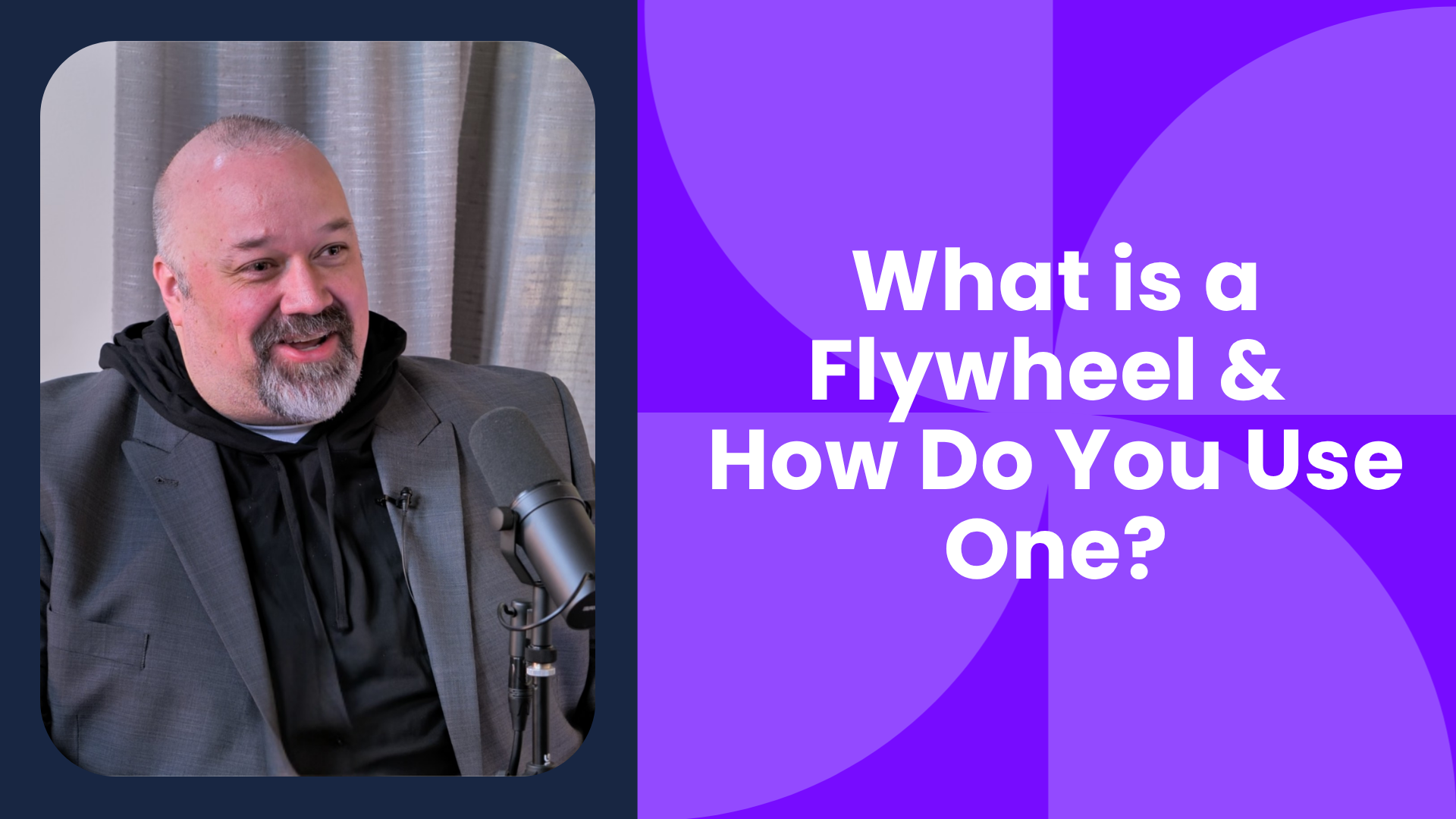
"A flywheel is an important tool for sales empowerment," said SVP, Director of Residential Sales Strategy Justin Tucker of Fidelity National Financial. "Empowerment is a far superior term to sales enablement, which has a negative connotation to me. Empowerment leads to execution, which leads to new data and insights, then new strategies, and even more execution. Faster iteration through that process creates a higher chance for success."
Watch this video clip where Tucker explains how a flywheel works.
That includes:
Empowered sales professionals don’t just know what to do; they understand why it matters and how to adapt when conditions change.
Execution is where the flywheel actually starts moving. It's where calls are placed, relationships are built, campaigns launch, conversations happen, systems are tested, and results are measured.
Execution creates outcomes and new data. The new data feeds directly back into the flywheel. You discover what worked and what didn’t work. You learn what customers responded to and where friction exists. You see what strategies need refinement.
That creates new insights which leads to new strategy and ultimately leads to stronger execution.
The cycle continues.
The real power of a flywheel isn’t just the process itself. It’s the speed at which you move through it. Markets, consumer behavior, and technology change quickly. The organizations and professionals who adapt fastest often win.
The faster you can gather insights, build strategy, empower execution, and learn from the results, the more relevant and competitive you become. A slow-moving business gets stuck reacting to yesterday’s market. A fast-moving flywheel keeps you aligned with today’s reality.
One of the most powerful things about this model is its flexibility. Companies, branches, teams, and individual professionals can all run a flywheel.
At the company level, the flywheel may focus on national trends and operational strategy while at the market level, it may focus on regional differences. Every market behaves differently. What resonates in one community may completely miss the mark in another.
Local nuance matters.
Individually, every professional should ask: What’s happening in my world right now?
This question encompasses:
The best professionals consistently evaluate and refine their personal flywheels.
You don’t need a massive organization to implement this approach.
Start simple.
What trends, patterns, or behaviors are emerging?
What needs to change or improve?
What tools, skills, or support are needed?
What results are showing up? Then repeat the cycle.
The Power of the Flywheel
The best sales professionals and organizations don’t succeed because they have perfect timing or flawless strategies. They succeed because they know how to adapt.
That’s the true power of a flywheel.
It creates a system of continuous improvement where every conversation, every result, and every market shift becomes an opportunity to learn, refine, and grow stronger. Instead of reacting to change, you build the ability to move with it.
In an industry where markets, consumer behavior, and technology evolve constantly, the businesses that win are rarely the ones standing still. They’re the ones iterating faster, learning faster, and executing with greater clarity and consistency. The momentum doesn’t come from one breakthrough moment. It comes from repeated cycles of insight, strategy, empowerment, and execution.
Eventually, what once required enormous effort becomes part of how your business naturally operates. That’s when a flywheel stops being a framework and starts becoming a competitive advantage.